

Build capability · Provisional page
Help your teams take ownership of the next improvement.
Once an organisation sees what better use of data could achieve, another question follows: how can our own people carry this forward? Training can introduce concepts, but teams also need experience applying them together. Domain experts, developers and those responsible for governance need a shared way to make decisions and learn from real work.
Connect learning to the capability you want to build.
InformationGrid modelling helps teams express domain knowledge through models, events and the rules that guide behaviour. InformationGrid development connects those models to working data products, interfaces and integrations. We adapt the depth to the roles involved and the problems they need to solve.
Agile Data brings these practices into a way of working that supports frequent learning and incremental change. Governance practice makes ownership, policy decisions and review part of everyday work. These capabilities support the reliable use of data in applications, analytics and AI, while helping teams understand their responsibilities when participating in dataspaces.
As part of Yuma, we connect this work to the wider ambition of AI transformation: making data, organisational capability and responsible use develop together.
Plan change together. Learn from its effect.
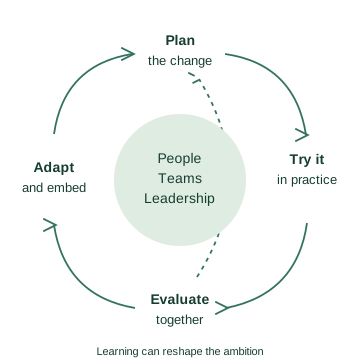
Building capability is organisational change, not simply a training programme. People, teams and leadership agree on the capability they need, the changes to everyday work that would support it and the evidence that would show progress. We then try a manageable change in practice, combining learning and coaching with real responsibilities.
Evaluation is a shared activity: is the new practice being adopted, does it improve the work, and what organisational obstacles remain? We use that evidence to adapt the approach and embed useful practices in normal work. Inspired by Plan–Do–Study–Act, this learning cycle can also change the original ambition or plan. Progress means growing ownership and better outcomes, not just completing more training.
Working methods that fit your situation.
A skills and role assessment can establish a useful starting point. Focused training sessions introduce concepts shortly before people apply them. Modelling workshops, paired development and coaching use a real organisational case, with reviews that connect technical choices to domain needs. Shared examples and peer learning help the knowledge spread beyond the initial team.
What the work makes possible
A next step you can build on.
The expected result is a team better able to model, develop and evolve its own data capabilities. Evidence can include a model the team can explain, an increment it can maintain or a review practice it can run independently. A tailored learning path, reusable examples and internal knowledge-sharing practices help sustain progress after the engagement.
Explore the technology your team will work with →Start a conversation